
Scoliosis in Children: What Parents Need to Know
Summary: Scoliosis is a three-dimensional curve of the spine that most commonly appears during the adolescent growth spurt. If you notice uneven shoulders, a rib hump, or an uneven waistline on your child, an assessment with a paediatric physiotherapist or GP can help determine whether any treatment is needed.
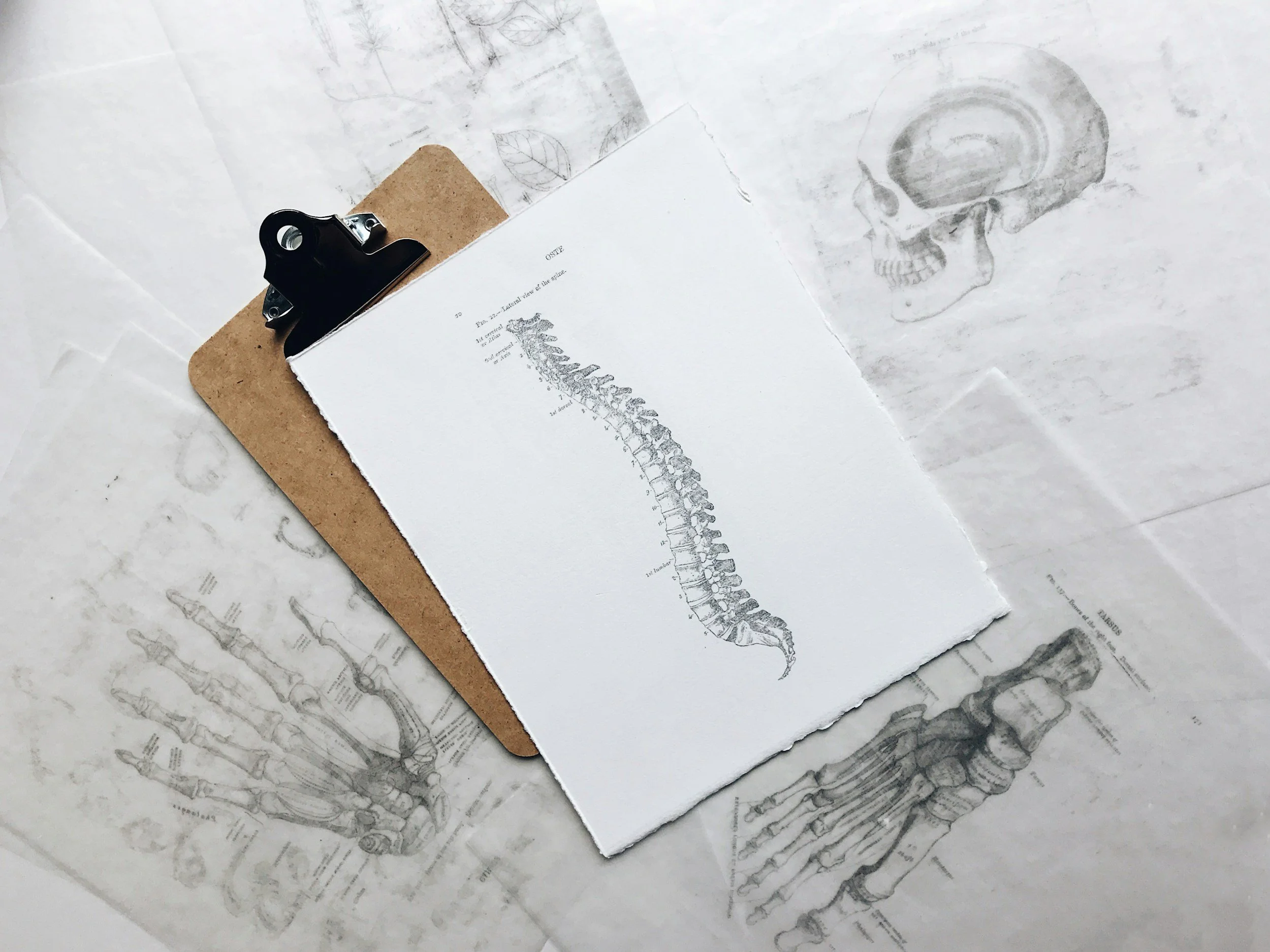
What is Scoliosis?
Scoliosis is a sideways curvature of the spine, usually combined with some rotation of the vertebrae. Instead of running straight down the back, the spine curves into a C or S shape. It’s a fairly common concern for families, and the good news is that most cases are mild. Statistically, around 3 in 100 people will develop a mild scoliosis (Cobb angle between 10-20 degrees), 5 in 1000 will develop a moderate scoliosis (Cobb angle between 20-45 degrees) and 1 in 1000 will develop a severe scoliosis (Cobb angle more than 45 degrees).
What Causes Scoliosis?
There are a few different types of scoliosis, and knowing which one your child has makes a big difference to what happens next.
Idiopathic scoliosis – by far the most common type. The exact cause isn’t known, but it tends to run in families, so genetics plays a role alongside factors we don’t fully understand yet. This is the type most often picked up during the adolescent growth spurt (around age 10–13 in girls, and a little later in boys).
Congenital scoliosis – present from birth, caused by the spine’s bones not forming typically. This is usually picked up earlier, often before age 10.
Neuromuscular scoliosis – linked to conditions that affect muscle or nerve control, such as cerebral palsy or muscular dystrophy.
One thing worth saying clearly: scoliosis is not caused by poor posture, heavy backpacks, soft mattresses, screen time, or diet. These are common worries for parents, but none of them cause the curve to develop. It’s simply not something you could have prevented.
Signs to Look Out For
Scoliosis doesn’t usually cause pain in children, which is part of why it can be easy to miss in the early stages. Signs tend to become more noticeable during growth spurts or during Summer when kids are wearing singlets or going swimming, and may include:
Uneven shoulders or shoulder blades that sit at different heights
One hip appearing higher or more prominent than the other
A visible curve or asymmetry in the spine
A rib “hump” or muscle bulge on one side of the back, most noticeable when your child bends forward
Uneven gap between the arm and the body when standing
Clothes or waistbands that hang unevenly
These signs can be subtle, especially in the early stages or in kids with more muscle bulk, so they’re often first noticed by a parent, teacher, or during a routine physio or GP check.
When to Get an Assessment
If you’ve noticed any of the signs above, it’s worth booking an assessment with a paediatric physiotherapist who has further training in scoliosis assessment and treatment. Early assessment doesn’t mean your child will need treatment as we know that most curves are mild, but it does mean any changes can be picked up and monitored appropriately.
It’s particularly worth getting checked if:
The asymmetry doesn’t improve or seems to be getting more noticeable over time
Your child is heading into or currently in a growth spurt
There’s a family history of scoliosis
Your child has an underlying neuromuscular condition
What Does an Assessment Involve?
A scoliosis assessment is quick, painless, and non-invasive. It typically includes:
The forward bend test (Adam’s test): Your child bends forward at the hips with arms hanging down, which makes any rotation or asymmetry in the spine much easier to see.
Posture and alignment check: Looking at shoulder height, hip level, and overall spinal alignment while standing.
Movement and flexibility assessment: Checking how the spine moves and whether there’s any stiffness or muscle imbalance.
Referral for imaging if needed: If a curve is suspected, your physiotherapist or
GP may refer for an X-ray. This confirms the diagnosis and measures the curve using something called the Cobb angle, which helps guide any treatment decisions.
Treatment Options
Treatment depends entirely on the size of the curve, your child’s age, and how much growth they have left. Options generally include:
Monitoring – for smaller curves (generally between 10-20 degrees), regular review is often all that’s needed, with no restriction on activity or sport.
Scoliosis-specific exercise programs – targeted exercise programs can support posture, strength, and comfort, and are increasingly used alongside monitoring or bracing. It’s worth knowing that while these exercises are genuinely helpful for how kids feel and function, they shouldn’t replace bracing when bracing has been recommended.
Bracing – for moderate, progressing curves, especially during a period of rapid growth, a brace may be recommended to help prevent further progression during remaining growth.
Surgery – reserved for larger or rapidly progressing curves. This is uncommon, needed in roughly 1 in 1,000 adolescents.
Key Takeaway
Scoliosis is more common than many parents realise, and in the vast majority of cases it’s mild and doesn’t need active treatment, just a bit of monitoring and possibly some exercises along the way. It isn’t something you could have caused or prevented. If you’ve noticed uneven shoulders, hips, or a rib hump when your child bends forward, an assessment with a paediatric physiotherapist is a simple first step to understand what’s going on and put your mind at ease.
FAQ’s
-
No. This is one of the most common myths. Scoliosis isn’t caused by posture, backpacks, mattresses, screen time, or diet. The main driver in the most common type (idiopathic scoliosis) is genetics combined with factors that aren’t yet fully understood.
-
Usually not, especially in children and early adolescence. This is part of why it can go unnoticed at first — it’s often picked up by appearance rather than by a child complaining of pain.
-
Most children won’t. The majority of curves are mild and only need monitoring. Bracing is reserved for moderate curves that are progressing, and surgery is uncommon, needed in only around 1 in 1,000 adolescents.
-
Exercise, including scoliosis-specific programs, can help with comfort, posture, and quality of life, and is a valuable part of many treatment plans. However, it isn’t a substitute for bracing when bracing is recommended, and it doesn’t reliably reverse a curve on its own.
-
There is a genetic component, and it does tend to run in families, particularly through the mother’s side. If there’s a family history, it’s worth mentioning this at your child’s assessment.
-
Signs are most likely to appear or become noticeable during growth spurts, generally from around age 10 onwards. If you notice any of the signs above at any age, it’s worth getting checked regardless of exact age.