
Self-Care Skills
Supporting Children to Develop Independence
Developing independent Self-Care Skills can support children’s success in their daily routines. We support families who are developing these skills and provide practical and reasonable strategies to achieve success.

What are Self-Care Skills?
Self-care skills are the everyday tasks children need to take care of themselves. These include dressing and undressing, brushing teeth and hair, eating and using utensils, toileting and hygiene, bathing and washing, managing zippers, buttons and shoelaces. Learning these skills is an important part of developing children’s independence and confidence.
Compassionate support for children and families to support Independence
Many factors can make self-care tasks challenging, such as:
Fine or gross motor difficulties (trouble with buttons, balance, or coordination)
Sensory sensitivities (avoiding certain textures, water, or clothing fabrics)
Cognitive or attention challenges (forgetting steps or losing focus)
Developmental delays or physical disabilities
Anxiety or low confidence when tasks feel hard or frustrating
Occupational therapists identify these barriers and help children learn the skills — and build the confidence children need to do more on their own.
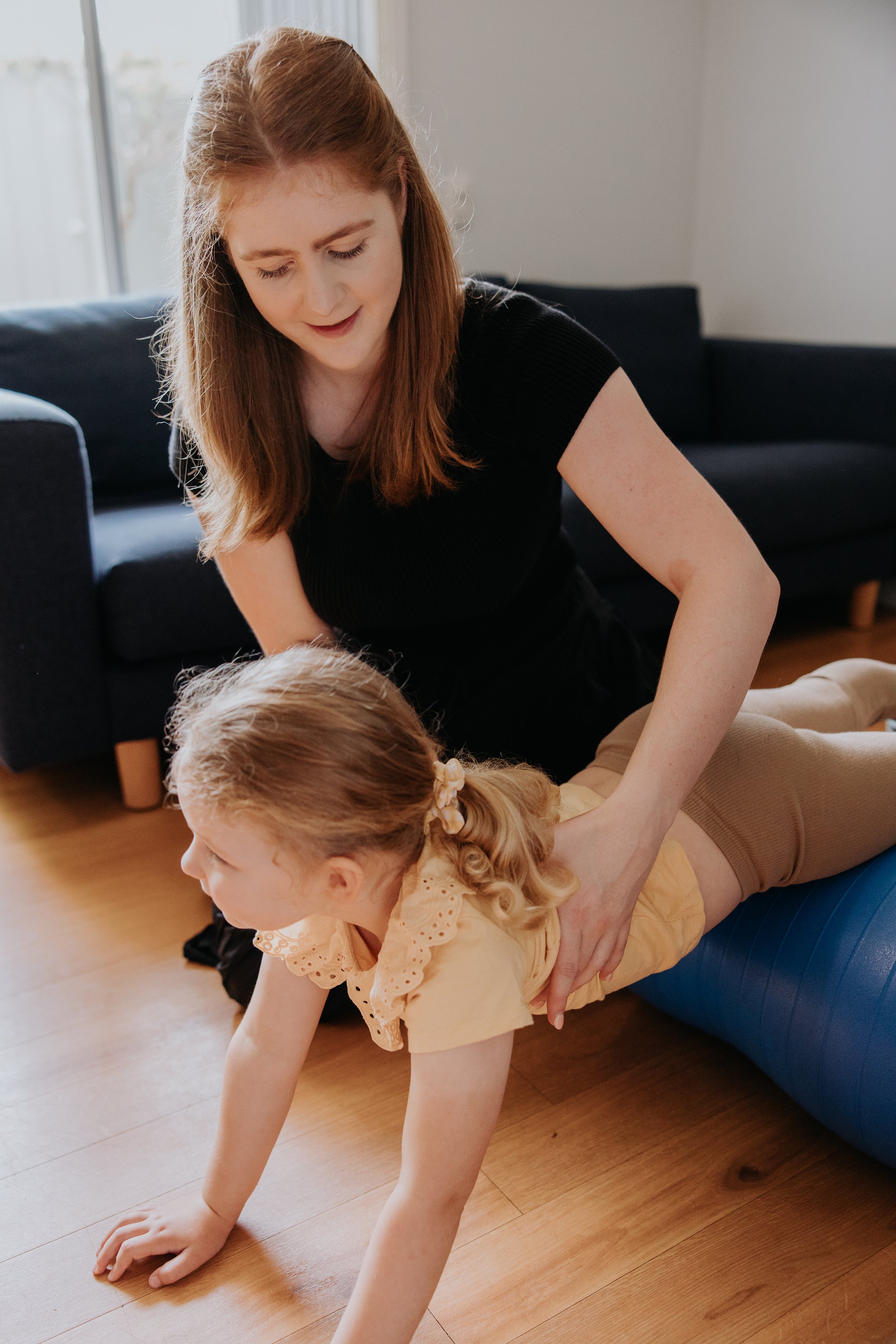
Peadiatric Self-Care Skills
Holistic, Thorough Assessments
to support your Family
Your child’s occupational therapy journey begins with a conversation about their development, day-to-day routine and goals. We like to assess all components that may contribute to challenges completing a functional skill such as sensory processing, fine motor skills, sequencing, emotional regulation and physical skills. We explain our findings clearly, create a personalised treatment plan with practical strategies for home. We collaborate with your GP or specialists— or provide further referrals when needed—to ensure your child receives the most comprehensive and supportive care.
1. Initial appointment
We start with a chat! We talk about your child’s development to date, any relevant medical history, your goals, what past treatment has worked well or not well, who else is in your medical team and allied health team – we like to know any relevant information so we can best support you.
2. Thorough assessment
We will assess how your child is currently completing activities of daily living to determine how we can best support them. We may complete additional assessments, for example, to determine information such as how they process sensory information.
3. Develop a treatment plan
Once we have assessed your child, we will summarise our findings and discuss a treatment plan. We usually book a parent consult to convey this information as it can be quite content heavy and not very interesting for little people!
4. We collaborate
We like to link in with your GP or specialist to coordinate our treatment approach. We want the best outcome for your baby which requires everyone on the same page.
5. Referral to other therapists
We may need to refer your child to a different service such as to a speech therapist or to an occupational therapist to ensure we are working holistically to support your child.
Questions, Answered with Care
Navigating therapy appointments for children can feel overwhelming. Explore our FAQs to learn what Paediatric Occupational therapy involves, who it can help, what sessions look like, and how we support families every step of the way.
-
Please bring any relevant medical summaries or letters – otherwise just you and your child. We do ask that siblings don’t attend where able so we can fully focus on the child attending the appointment.
-
You don’t require a referral to see us – Please call our lovely admin team or complete the OT Waitlist Form
-
We do work with children who are NDIS funded. To access our service we require children to be self-managed or plan managed.
With the recent funding cuts to the NDIS, we really recommend that families are self-managed if able.
-
We require 4 weeks’ notice to write NDIS reports as they do take 2-3 hours on average (sometimes more, sometimes less).
-
Our initial appointments are around 1 hour and follow up appointments are around 45 minutes.
-
Our therapists need to see your child at an initial appointment to make a recommendation on what treatment plan they think will be most successful moving forward. We’ve found that children who have come to us from other clinics sometimes need more or less therapy than they were previously receiving or may require more land-based vs hydrotherapy than they were previously receiving. We don’t book initial appointments unless we have capacity to see your child ongoing.
Have questions? Go to our FAQs
Help Starts Here!
If you're seeking care for your child's physical development and well-being, we're here to help. We are committed to providing compassionate and effective treatment tailored to your child's unique needs. Whether your child is experiencing difficulties with mobility, balance, coordination, or other physical challenges, we're here to support them on their journey toward improved strength, function, and independence.
Contact us today to schedule an appointment and take the first step toward unlocking your child's full potential.