
Fine-Motor Skills
Fine Motor Skill Development for Confident, Independent Kids
Fine motor skills allow children to better manipulate objects and perform precise movements with their hands. This can include using cutlery, navigating buttons and zippers and handwriting. We work with children to develop their hand function to allow them to fully participate in the activity in front of them without limitation
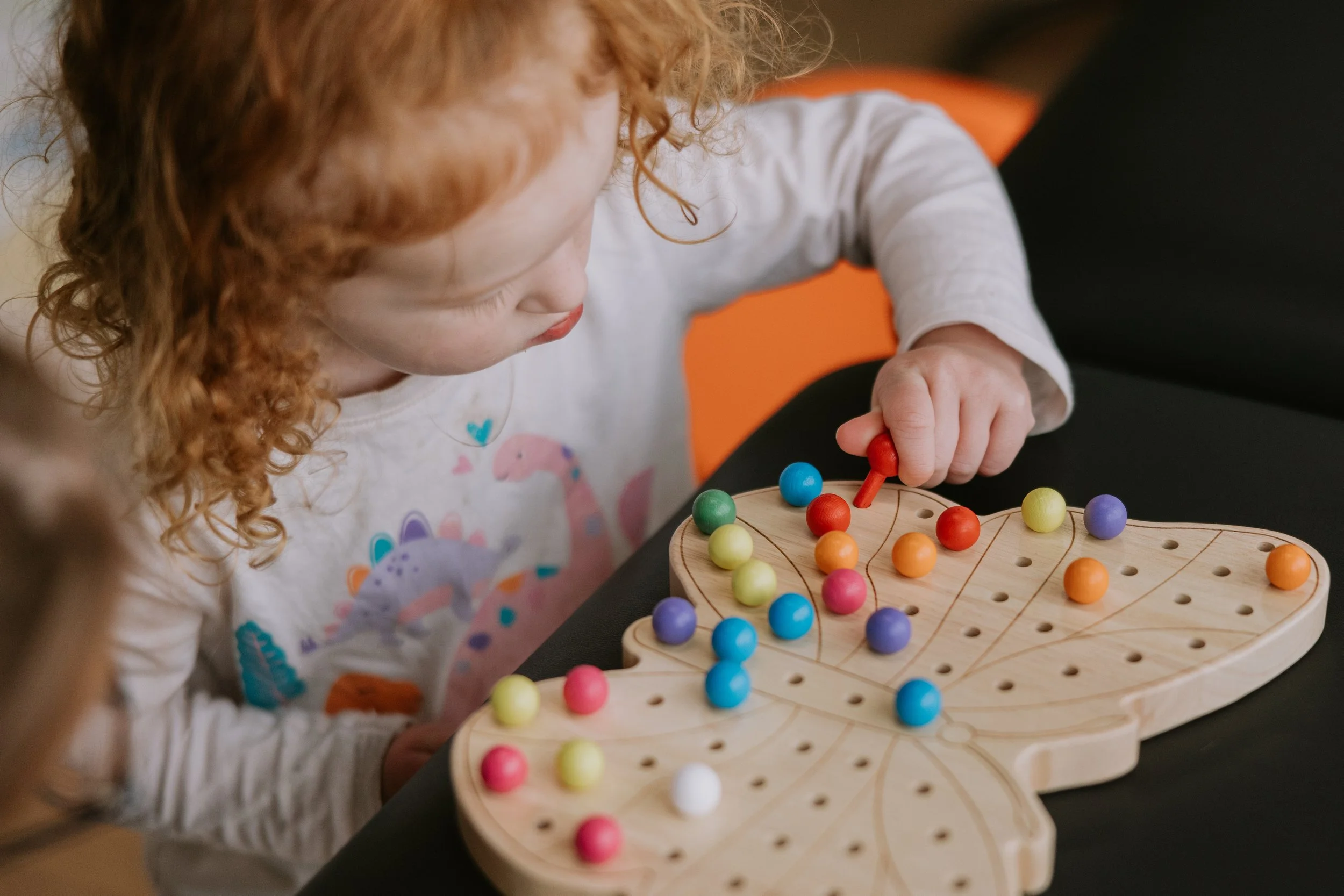
How do Occupational Therapists work on Fine Motor Skills?
Fine motor skills are made up of various sub-skills such as joint position awareness, muscle strength, joint range of motion, sequencing skills and emotional regulation within an environment. Our Occupational Therapists will work with your child to assess what area is impacting your child the most and develop a therapy plan to address this. Sometimes we also do whole-task practice which means practicing the skill that is challenging; however this is only a small portion of what we do.
What Impacts Fine Motor Skill Development
Supporting Children to Build Confident, Coordinated Hand Skills
Your child’s fine motor journey begins with a warm conversation about their development, strengths, and challenges before we assess how they use their hands for everyday tasks like handwriting, cutlery, and fasteners. We then create a personalised plan with practical strategies to use at home and in the clinic, collaborate with schools and other professionals when needed, and provide ongoing reviews to support steady progress and growing independence.
1. Let’s Chat!
If working on fine motor skills is a standalone goal, our initial in-clinic appointment will provide the opportunity to discuss your child’s development to date, any relevant medical history and better understand what has prompted you to seek assistance. We might ask about your child’s likes and dislikes, how your child learns best, and what you have tried (if anything) in the past to work on fine motor skills.
2. Thorough assessment
We will assess how your child currently approaches fine motor skills such as cutlery use, handwriting, buttons and zippers to better understand your concern. We might also look at other more specific assessments such as visual tracking, proprioception assessments, tactile discrimination assessments, sequencing skills and sensory preferences.
3. Develop a treatment plan
Once we have completed both our discussion and assessment, we will have a better idea about strategies are likely to be effective to support your child to develop their fine motor skills. We will explain what we are working on and why and provide you some intervention strategies to practice either in clinic or at home (or both!). Sometimes we may need to trial a few different strategies until we work out what solution is best for your child’s individual needs.
4. We collaborate
We may reach out to your child’s school or preschool to ensure the strategies we recommend can be utilised across the different areas your child engages in. We want the best outcome for your child which requires everyone on the same page. Depending on the complexity of your child, we may need to work with other professionals such as physiotherapists, behavioural ophthalmologists or other allied health professionals.
5. Referral to other therapists
We want to ensure the strategies that we have recommended are working. We usually book follow up appointment/s at the initial appointment to ensure we can follow the progress of your child, progress the interventions and support your child to achieve independence.
Questions, Answered with Care
Navigating therapy appointments for children can feel overwhelming. Explore our FAQs to learn what Paediatric Occupational therapy involves, who it can help, what sessions look like, and how we support families every step of the way.
-
Please bring any relevant medical summaries or letters, any current pencil grips or cutlery that your child is currently using. If there is a specific zipper or button size that is particularly challenging, it will be helpful to bring this with you also.
-
You don’t require a referral to see us – you can call our reception team or complete the online form HERE (link to waitlist form)
-
We do work with children who are NDIS funded. To access our service we require children to be self-managed or plan managed.
With the recent funding cuts to the NDIS, we really recommend that families are self-managed if able.
-
We require 4 weeks’ notice to write NDIS reports as they do take 2-3 hours on average (sometimes more, sometimes less).
-
Our initial appointments are around 1 hour and follow up appointments are around 45 minutes of face to face time. We usually also book in associated non-face-to-face time with all appointments to allow our therapists to complete any associated administration.
-
Our therapists need to see your child at an initial appointment to make a recommendation on what treatment plan they think will be most successful moving forward. We’ve found that children who have come to us from other clinics sometimes need different therapy dosage than they were previously receiving so we rely on our therapists assessing your child first to developing a treatment plan prior to booking appointments ongoing
Have questions? Go to our FAQs
Help Starts Here!
If you're seeking care for your child's physical development and well-being, we're here to help. We are committed to providing compassionate and effective treatment tailored to your child's unique needs. Whether your child is experiencing difficulties with mobility, balance, coordination, or other physical challenges, we're here to support them on their journey toward improved strength, function, and independence.
Contact us today to schedule an appointment and take the first step toward unlocking your child's full potential.