
Developmental Milestones
Support your baby to achieve their Developmental Milestones
Achieving developmental milestones ontime show that children are developing strength, balance, coordination, and movement skills as expected. Whilst every child grows at their own pace, knowing what to expect—and when to seek support—can give parents confidence and peace of mind. When children don’t meet their milestones as expected, it can be a sign to seek support.
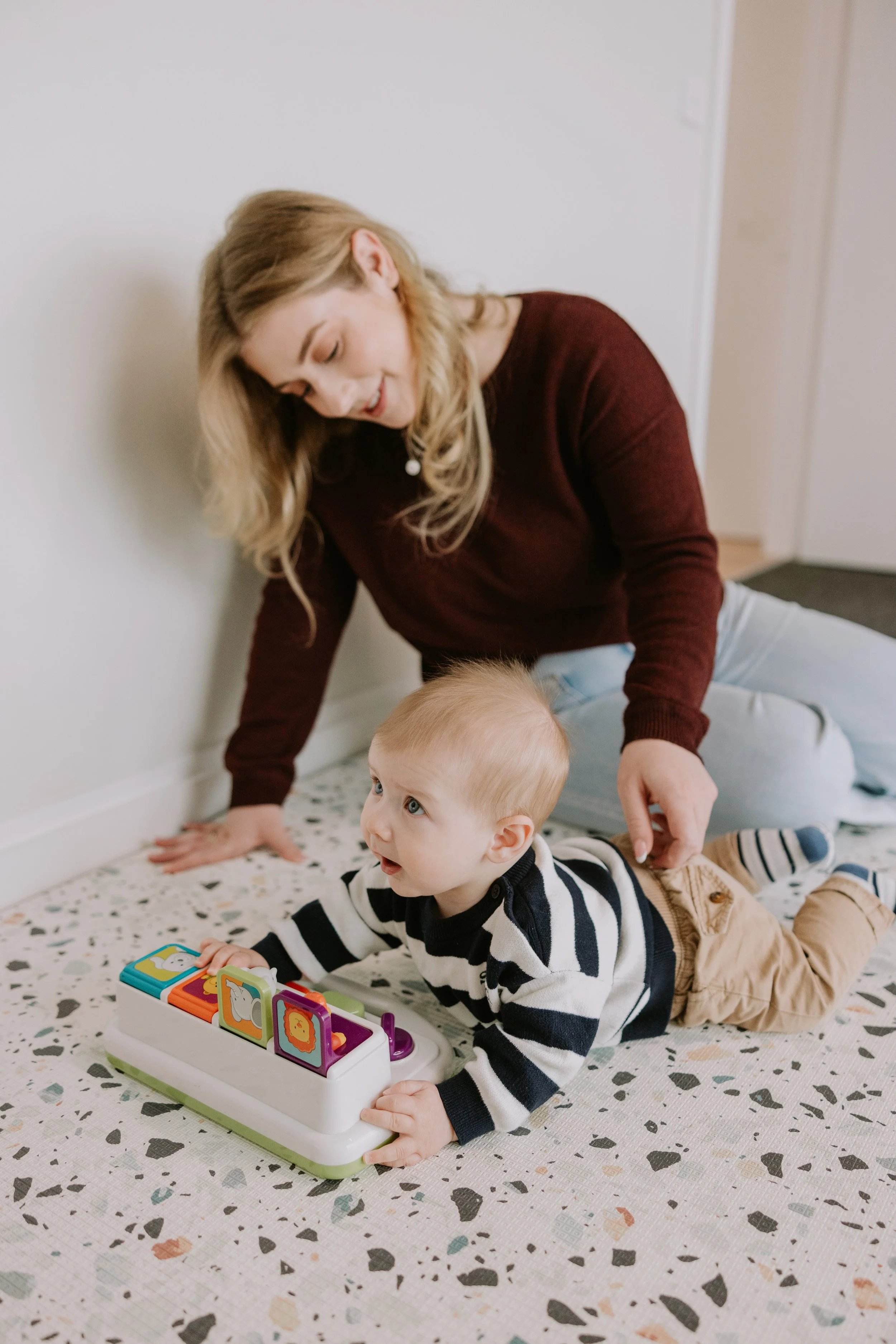
Why are Milestones Important?
Each milestone achievement is reflective of a child achieving the underlying competencies required to do the big movement. For example, for children to be able to roll, they need to first develop visual tracking skills, balance systems, strength in their shoulders, neck and trunk to initiate and complete the movement. When children are delayed in their gross motor milestones, it is often an early sign that a child has tightness or weakness. Seeking support early can prevent continued delays and support development
Comprehensive Paediatric Physiotherapy to Nuture Development
At Canberra Children’s Physiotherapy, our Paediatric Physiotherapists are here to help you navigate your child’s motor development with evidence-based guidance and early intervention when needed. If you have any concerns—or simply want reassurance—our team is here to help. Contact us to book an assessment for confident movement from the very beginning.
When do Babies achieve each Developmental Milestone?
Gentle, Thorough Assessments
for Your Baby’s Best Start
Your baby’s physiotherapy assessment begins with a warm conversation about their birth, development, sleep, and feeding before we complete a gentle, head-to-toe evaluation of their movement, muscle tone, and joint function. We explain our findings clearly, create a personalised treatment plan with practical strategies for home, and collaborate with your GP or specialists—arranging scans or further referrals when needed—to ensure your baby receives the most comprehensive and supportive care.
1. Initial appointment
We start with a chat! We talk about baby’s birth and how they’ve been developing since being earthside. We delve into their sleep and feeding patterns, any concerns that have arisen and may ask more specific questions about your presenting concern. We will usually also ask when they’ve achieved their current developmental milestones to date.
2. Thorough assessment
We always do a ‘Head-to-Toe’ Assessment to fully assess baby’s muscles and joints. We look at how baby is moving in different positions. We explain what we are observing throughout our assessment and why it’s relevant
3. Develop a treatment plan
Once we have assessed your child, we will summarise our findings and discuss a treatment plan. This may include stretches, strengthening exercises, sensory based interventions, positioning and movement advice. We rarely advise to practice rolling to improve rolling or practice crawling to improve crawling as we believe that there is always an underlying reason that they aren’t initiating the movement on their own – usually tightness or weakness!
4. We collaborate
We like to link in with your GP or specialist to coordinate our treatment approach if needed. We want the best outcome for your baby which requires everyone on the same page.
5. Referral to other therapists
Sometimes we may need to refer your baby for a scan or to another specialist to get some more information to help with a diagnosis or treatment plan.
Questions, Answered with Care
Navigating movement concerns for children can feel overwhelming, but you’re not alone. Explore our FAQs to learn what baby physiotherapy involves, who it can help, what sessions look like, and how we support families every step of the way.
Want to know when your child should be achieving gross motor milestones? Download our Gross Motor Milestone Checklist below!
-
If you can, baby’s blue book can be helpful for us to look at as it contains baby’s growth trajectory and birth history.
Dress baby in something they can move in that is easy to take on and off as we often look at baby’s hips, spine and feet during our assessments.
-
Most government websites will list 18 months as the ‘red-flag’ deadline of when to get your child assessed if they aren’t walking. This is the age where they are considered to be definitely delayed.
What we see in clinic is that usually if a child isn’t walking before 15 months, there is tightness or weakness.
Our experience if that when treatment is delayed, children need treatment more intensely and for longer. Delayed movement also impacts other skills such as speech, play skills and social development as children aren’t able to engage with peers as easily.
-
We recommend coming to see is if your child hasn’t developed the gross motor milestone within a month of the expected timeframe.
-
You don’t require a referral to see us – you can book online or call the clinic to speak with our reception team.
-
In physiotherapy, we focus lots on the development of the musculoskeletal system – looking at muscles, joints/bones, sensory and neurological systems. We usually are setting specific play-based exercises, stretches or strengthening tasks for you to complete with your child.
Since the release of the international position statement on spinal manipulation and mobilisation in children aged under 2 years old, we know that hands-on intervention to the spine or soft tissue adjacent to the spine has been contraindicated (not recommended) due to the increased risk of adverse reaction comparative to other evidence-based therapies. It can be considered once children are over 2 years old, however is still discouraged until around 6 years of age and should only be done by a very experienced therapist. See consensus statement HERE:
-
Our initial appointments are around 1 hour and follow up appointments are around 45 minutes.
-
Children all develop at their own pace, however there are windows of development that we expect children to develop at. We find that if children are delayed in achieving a milestone within 1-2 months of the expected milestone, there is usually tightness or weakness that is holding them back. By addressing it as soon as it's noticed, children's often don't need as much treatment to help them get back on track!
Have questions? Go to our FAQs
Help Starts Here!
If you're seeking care for your child's physical development and well-being, we're here to help. We are committed to providing compassionate and effective treatment tailored to your child's unique needs. Whether your child is experiencing difficulties with mobility, balance, coordination, or other physical challenges, we're here to support them on their journey toward improved strength, function, and independence.
Contact us today to schedule an appointment and take the first step toward unlocking your child's full potential.