
Scoliosis
Scoliosis physiotherapy for children in Canberra
Scoliosis is an abnormal curvature of the spine where, instead of running straight, the spine curves sideways — and in most cases, the vertebrae twist too. It's most commonly identified in children and adolescents during periods of growth, and can range from mild to more significant curves that require active management.
With the right support, most children with scoliosis can stay active, manage their symptoms, and feel confident in their bodies.
Ready to take the next step? Book an appointment today and we'll assess your child's spine and put together a plan tailored to them.
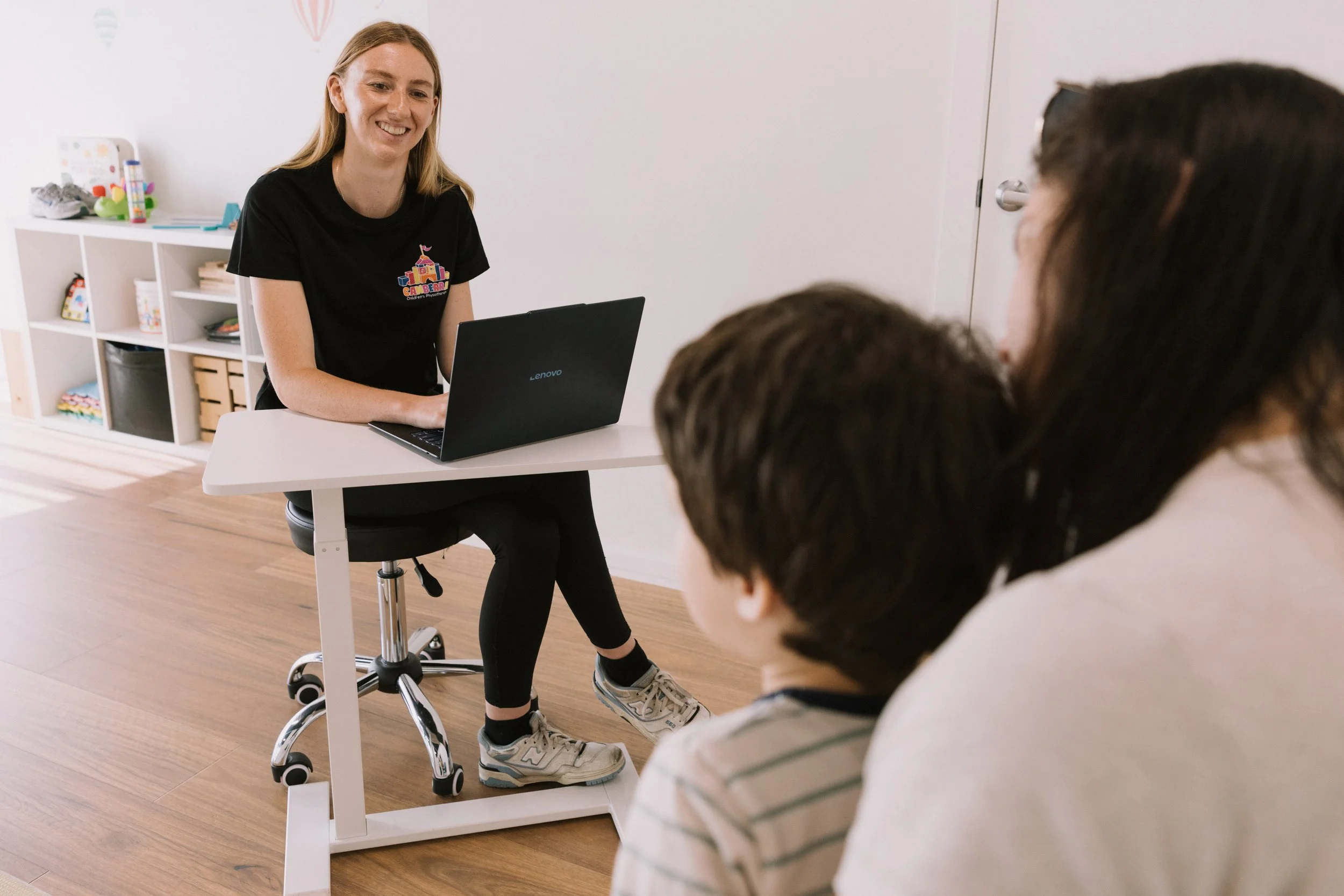
Scoliosis in Children and Adolescents
Scoliosis is when the spine curves sideways instead of running straight down the centre of the back. In most cases, the vertebrae (the bones of the spine) also rotate slightly, which can cause one shoulder blade, hip, or side of the ribcage to appear more prominent than the other. Scoliosis presentations can vary greatly in cause, severity, and how it progresses, which is why individualised assessment and management is so important.
Idiopathic Scoliosis
The most common form of scoliosis in children is idiopathic scoliosis, meaning it develops without a clearly identified cause. It is further classified by the age at which it is first diagnosed:
Juvenile idiopathic scoliosis
is diagnosed between the ages of 3 and 9. While less common than adolescent scoliosis, it carries a higher risk of progression because of the significant growth remaining ahead. For this reason, children in this age group benefit from early monitoring and, where indicated, early intervention.
Adolescent idiopathic scoliosis (AIS)
is the most frequently seen type, typically identified between the ages of 10 and 18. It most commonly affects girls, and the risk of curve progression is greatest during periods of rapid growth — often around the pubertal growth spurt. Many young people are identified through routine screening, when a parent notices uneven shoulders or hips, or when a child reports back discomfort or fatigue.
Signs that may suggest scoliosis include:
One shoulder or shoulder blade sitting higher than the other
A visible curve or lean to one side when standing
One hip appearing higher or more prominent
Uneven waistline
In some cases, back pain or muscle tightness, particularly with activity
It is important to note that mild scoliosis may cause no symptoms at all, and many children are identified incidentally.
Scoliosis Associated with Other Diagnoses
Some children develop scoliosis as a result of an underlying neurological or neuromuscular condition. This is referred to as secondary or syndromic scoliosis, and it is commonly seen in children with:
Cerebral palsy
Spinal muscular atrophy (SMA)
Muscular dystrophy
Spina bifida
Rett syndrome
Connective tissue conditions such as Marfan syndrome or Ehlers-Danlos syndrome
In these cases, scoliosis often develops due to reduced muscle control, asymmetrical muscle tone, or prolonged postures that place uneven load on the growing spine. Curves in this group can progress more rapidly and may require a coordinated approach across multiple treating clinicians, including physiotherapists, orthotists, and orthopaedic specialists.
Management for children with complex diagnoses is always tailored to their individual presentation, functional level, and overall goals of care.
Physiotherapy Treatment
Physiotherapy plays an important role across the spectrum of scoliosis severity from monitoring mild curves to supporting children undergoing bracing or preparing for surgery. Treatment is always individualised and evidence-based.
Physiotherapy Assessment
A thorough physiotherapy assessment is the foundation of effective scoliosis management. At our practice, assessments are child-centred and family-informed, and typically include:
1. Postural and spinal screening:
visual assessment of spinal alignment, shoulder and hip symmetry, and waistline asymmetry in standing and forward bending (the Adams forward bend test).
2. Range of motion:
evaluation of spinal and hip mobility, and how movement patterns may be contributing to or affected by the curve.
3. Muscle strength and control:
assessment of trunk, hip, and shoulder girdle strength, as well as the child's ability to actively correct their posture.
4. Functional movement:
observation of how scoliosis affects everyday activities, sport, or school participation.
5. Breathing assessment:
in more significant curves, rib cage rotation can affect breathing mechanics, and this is incorporated into our assessment where relevant.
6. Goal setting:
understanding what matters most to the child and family, whether that is pain management, participation in sport, confidence with their appearance, or monitoring for progression.
When to Seek Assessment
We recommend seeking a physiotherapy assessment if you notice any asymmetry in your child's posture, if scoliosis has been identified by a GP or specialist and you would like support with management, or if your child is reporting back pain or tiring easily with activity.
Early assessment allows for earlier intervention where it is needed, and provides reassurance and monitoring for curves that may not require active treatment at this stage.
Our team has experience working with children across a wide range of presentations, from mild postural scoliosis through to complex curves in children with neurological conditions. We work collaboratively with families, schools, and medical teams to support each child's individual needs
-
If you have a referral or scan result that is relevant to your concern, please bring it with you. Please wear shorts or tights rather than loose clothing as it helps us see the alignment better.
We do require a parent to attend the appointment with children.
-
You don’t require a referral to see us – you can book online or call the clinic to speak with our reception team.
-
Our initial appointments are around 1 hour and follow up appointments are around 45 minutes.
-
Yes – we usually have various sizes of moon boots to fit small feet. We also stock paediatric crutches and other braces such as forearm braces and knee supports. If we do require a specific device for your child, we usually order it in after the initial assessment.
-
We see children when growth or the structural differences in children impact injury or rehabilitation (usually from birth to around 14/15 years). When children injure themselves during sport, sometimes growth can complicate their progress or impact the treatment plan. If this is the case, we recommend seeing a paediatric physiotherapist.
If the injury occurs in high-level sport AND growth isn’t an impacting factor, we recommend seeing either a paediatric physiotherapist or an adult therapist – whatever is most convenient.
Have questions? Go to our FAQs
Help Starts Here!
If you're seeking care for your child's physical development and well-being, we're here to help. We are committed to providing compassionate and effective treatment tailored to your child's unique needs. Whether your child is experiencing difficulties with mobility, balance, coordination, or other physical challenges, we're here to support them on their journey toward improved strength, function, and independence.
Contact us today to schedule an appointment and take the first step toward unlocking your child's full potential.