
Hypermobility
Hypermobility Physiotherapy for Children in Canberra
Hypermobility is when joints move beyond their expected range of motion and can be either generalised, meaning it affects the whole body, or can be specific to certain joints. For some children hypermobility can be a contributing cause to pain, injury, developmental delays, poor coordination or fatigue, and for others it can be asymptomatic.
Physiotherapy can help children with hypermobility to regain stability, reduce pain and injury and achieve gross motor milestones.
Ready to take the next step? Book an appointment today and we’ll assess your child for signs of hypermobility and determine an effective treatment plan to support their development.

Common Types of Hypermobility
Hypermobile Ehlers-Danlos Syndrome (hEDS):
HEDS is the most common sub-type of Ehlers Danlos Syndrome. HEDS is usually categorised by widespread hypermobility accompanied by musculoskeletal issues and specific skin, cardiac (heart) and skeletal features and is often linked to a family history of similar traits. Hypermobile Ehlers Danlos Syndrome commonly co-occurs with other conditions such as Postural Orthostatic Tacycardia Syndrome (POTS).
Hypermobility Spectrum Disorder (HSD):
HSD is the diagnosis given when a person demonstrates hypermobility associated with significant pain or recurrent injury. There are a number of sub-types of HSD including historical HSD, localised HSD, peripheral HSD and generalised HSD. HSD diagnoses hypermobility that does not meet the strict diagnostic criteria for hEDS.
Ehlers Danlos Syndrome (EDS):
Ehlers Danlos Syndrome is a group of connective tissue disorders that involve a genetic variation affecting the structure of processing of the collagen fibres that contribute to the flexibility of muscles, skin, connective tissue, blood vessels and organs. EDS symptoms vary greatly between individuals. Some symptoms may include frequent injury (such as joint dislocations), stretchy skin, low threshold for bruising and slow healing.
Common Conditions associated with Hypermobility conditions can include:
Postural Orthostatic Tachycardia Syndrome (POTS) is a form of autonomic nervous system dysfunction causing heart rate decrease upon standing that can cause dizziness, fatigue, brain fog and reduced exercise tolerance.
Mast Cell Activation Syndrome (MCAS) which causes dysregulation of mast cells that can contribute to allergy reactions such as hives, rashes, swelling, gastrointestinal upset and systemic inflammation.
Gastrointestinal dysmotility which can cause constipation or diarrhea symptoms, nausea or vomiting that is caused by altered gut motility and connective tissue disorders.
Generalised fatigue is one of the most commonly reported symptoms of HSD/hEDS.
Chronic Pain Conditions such as central sensitization or peripheral sensitisation symptoms
Neurodivergence and neurodevelopmental disabilities have been linked to hypermobility conditions in emerging research
Physiotherapy Treatment
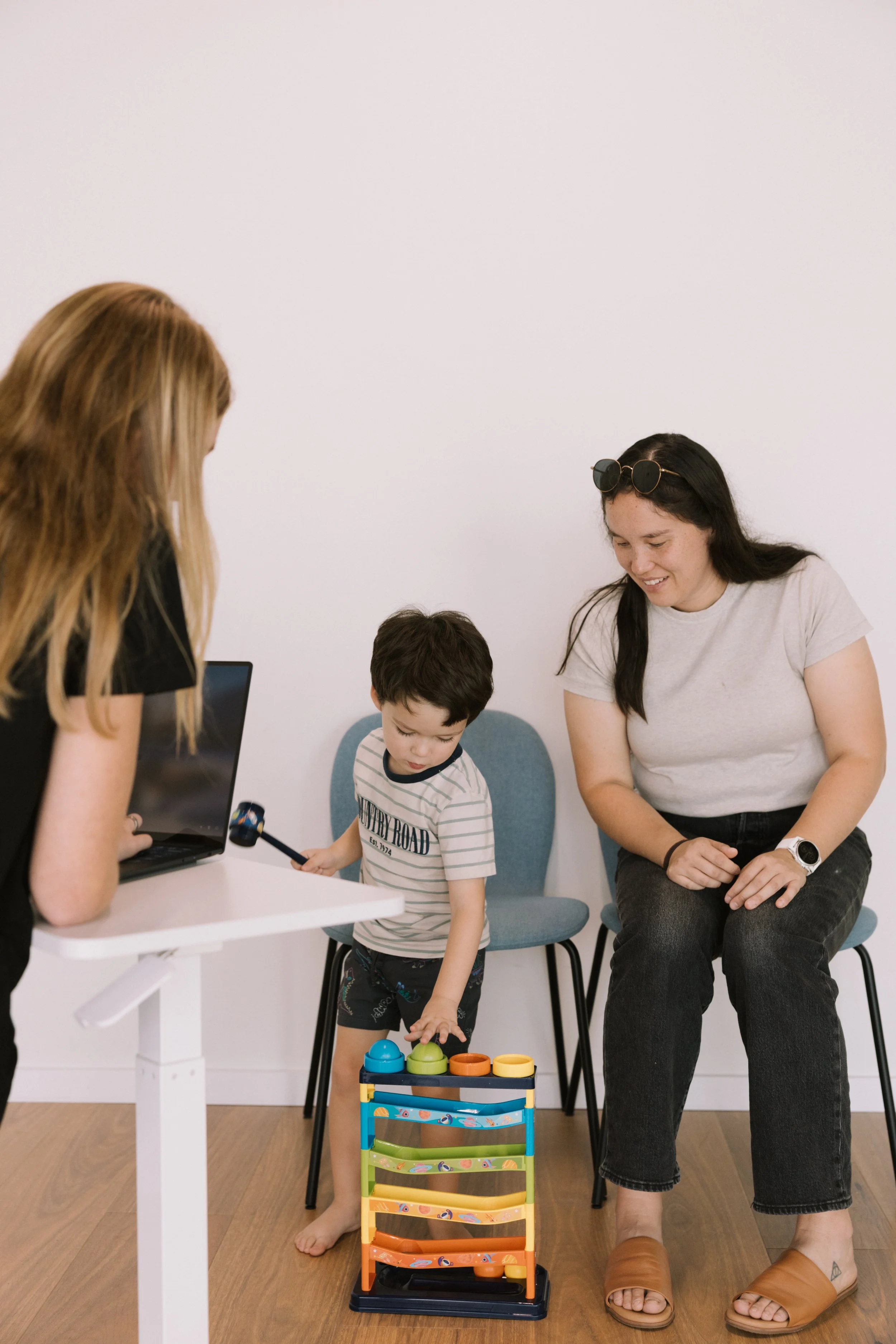
Physiotherapy plays an important role in developing strength and stability in children with hypermobility.
Hypermobility Assessment
A thorough physiotherapy assessment is the foundation of effective hypermobility management. At our practice, assessments are child-centred and family-informed, and typically include:
Initial Appointment
We start with a chat! We talk about the signs and symptoms of hypermobility, any co-occurring conditions and what the impact is on your child’s development
2. Thorough Assessment
We assess the joints to determine if there is generalised hypermobility or if the hypermobility only affects certain joints. We may use assessment tools such as the Beighton’s scale, however we also measure range of motion, assess the mobility between individual bones, assess muscle strength and function.
3. Develop a treatment plan
Once we have completed an assessment, we will summarise our findings and discuss a treatment plan. This may include stretches, strengthening exercises, sensory based interventions, bracing or movement advice.
4. We Collaborate
We link in with your GP or specialist to coordinate our treatment approach. We want the best outcome for your child, which requires everyone on the same page.
5. Referral to other therapists
Sometimes we may need to refer your child to other medical specialists or allied health therapists to provide specialist medical input and to support a holistic treatment approach.
When to Seek Assessment
We recommend seeking a physiotherapy assessment if you notice your child is unusually flexible compared to peers, if they're reporting joint pain, frequent "clicking," or tiring easily with activity, or if hypermobility has been identified by a GP or specialist and you'd like support with management.
Early assessment allows for earlier intervention where it is needed, and provides reassurance and monitoring for children whose hypermobility may not require active treatment at this stage.
Our team has experience working with children across a wide range of presentations, from mild generalised joint hypermobility through to more complex presentations such as Hypermobility Spectrum Disorder (HSD) or hypermobile Ehlers-Danlos Syndrome (hEDS). We work collaboratively with families, schools, and medical teams to support each child's individual needs.
-
If you have a referral or scan result that is relevant to your concern, please bring it with you. Please wear shorts or tights rather than loose clothing as it helps us see the alignment better.
We do require a parent to attend the appointment with children.
-
You don’t require a referral to see us – you can book online or call the clinic to speak with our reception team.
-
Our initial appointments are around 1 hour and follow up appointments are around 45 minutes.
-
We believe an accurate diagnosis is important to inform treatment. It helps us understand what factors may be impacting their gross motor skill development and provides us with evidence-based strategies on how to help them.
-
A physiotherapist or GP will take a history covering things like joint pain, dislocations or subluxations, fatigue, skin and tissue characteristics, and any family history, especially since hypermobility often runs in families. Depending on what's found, a child may be described as having generalised joint hypermobility, or, if there's associated pain and functional impact, Hypermobility Spectrum Disorder (HSD) or hypermobile Ehlers-Danlos Syndrome (hEDS) - the latter usually requiring assessment against a specific set of diagnostic criteria, sometimes involving a specialist referral.
Have questions? Go to our FAQs
Help Starts Here!
If you're seeking care for your child's physical development and well-being, we're here to help. We are committed to providing compassionate and effective treatment tailored to your child's unique needs. Whether your child is experiencing difficulties with mobility, balance, coordination, or other physical challenges, we're here to support them on their journey toward improved strength, function, and independence.
Contact us today to schedule an appointment and take the first step toward unlocking your child's full potential.