
Does My Child Have Cerebral Palsy?
Summary: Cerebral palsy (CP) is the most common physical disability in childhood. It affects movement, posture, and coordination, and no two children with CP are the same. Early signs can appear in the first year of life and include asymmetrical movement, delayed milestones, and unusual muscle tone. Early diagnosis and intervention make a real difference — and you don't need a formal diagnosis to seek a physiotherapy assessment. If something feels different about the way your child moves, trust that instinct and reach out.
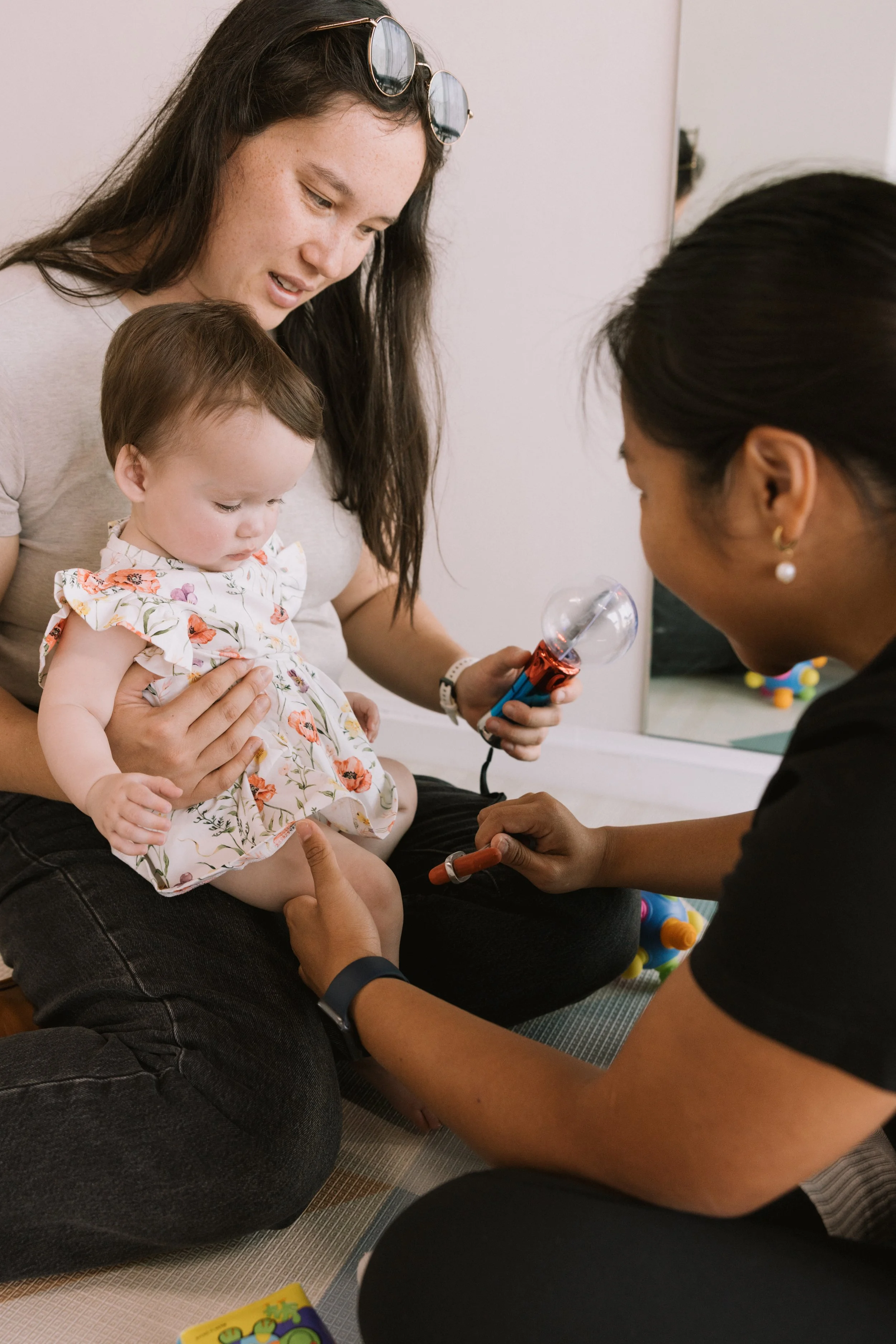
If you’ve found yourself searching this question, you’re not alone. Many parents notice something feels different about the way their child moves, reaches, or develops, and that instinct deserves to be taken seriously. Whether you’ve been told by a doctor to “wait and see” or you’re simply trying to make sense of what you’re observing, this page is here to help.
At Canberra Children’s Physio, we work with children with cerebral palsy (CP) and their families every day. We have additional training in the General Movements Assessment (GMs) and the Hammersmith Infant Neurological Exam (HINE) that are movement assessments that can be highly predictive of Cerebral Palsy. We understand how overwhelming the early stages of seeking answers can feel, and we want to support you through it.
What Is Cerebral Palsy?
Cerebral palsy is the most common physical disability in childhood. It is a permanent but non-progressive condition affecting movement, posture, and coordination, caused by damage to or differences in the developing brain, most often occurring before, during, or shortly after birth.
“Cerebral” refers to the brain, and ”palsy” refers to difficulties with movement and motor control. Because the brain injury itself does not worsen over time, CP is described as non-progressive, though how it presents in a child’s body can change as they grow. No two children with cerebral palsy are the same. CP exists on a wide spectrum, and the impact on movement, muscle tone, and daily function varies greatly from one child to another.
What Are the Early Signs of Cerebral Palsy?
Many parents first notice something feels different in the first year of life. Signs can be subtle, and they are often easier to identify when you know what to look for.
In babies (0–6 months)
Feeling unusually stiff or floppy when held
Difficulty turning the head or showing a strong preference for looking to one side
Delayed or absent reaching toward objects
Asymmetrical movement, using one side of the body more than the other
Difficulties feeding, sucking, or swallowing
Being startled easily or having difficulty settling
In older babies (6–12 months)
Delayed sitting, rolling, or crawling milestones
Using one hand significantly more than the other before 12 months (hand
dominance before this age can be a red flag)
Not bearing weight through the legs when supported in standing
Scissoring of the legs (crossing them tightly when lifted)
Persistent fisting of one or both hands
In toddlers and older children
Walking on tiptoes or on the inside/outside edges of the feet
An uneven gait or asymmetrical running pattern
Difficulty with fine motor tasks such as holding a pencil, doing up buttons, or using cutlery
Falls more frequently than other children of the same age
Difficulty with coordination, balance, or ball skills
Stiffness or tightness in limbs, particularly after rest
It’s important to note that having one or more of these signs does not mean your child has cerebral palsy. Many of these signs also appear in children with other developmental conditions, or in typically developing children. If you’re concerned, seeking an early assessment is always the right step.
Are There Different Types of Cerebral Palsy?
Yes! Cerebral Palsy is classified based on the type of movement difficulty and the parts of the body affected.
By movement type:
Spastic CP is the most common type, involving increased muscle tone (stiffness or tightness) that makes movement feel effortful or restricted.
Dyskinetic CP involves fluctuating muscle tone and involuntary, uncontrolled movements, including slow writhing movements (athetos) or sudden jerky movements (chorea).
Ataxic CP affects coordination and balance, often causing unsteady or “Wobbly” movement.
Mixed CP involves features of more than one type.
By the parts of the body affected:
Hemiplegia: one side of the body (arm and leg)
Diplegia: primarily the legs, with the arms less affected
Quadriplegia: all four limbs significantly affected
Understanding the type and distribution of CP helps therapists tailor treatment to your child’s specific needs.
How Is Cerebral Palsy Diagnosed?
Cerebral Palsy is a clinical diagnosis, meaning it is made based on a detailed assessment of your child’s developmental history and movement patterns, often combined with neuroimaging such as cranial ultrasound or MRI. There is no single test
for cerebral palsy.
A diagnosis is typically made by a paediatrician or paediatric neurologist. They will consider:
Pregnancy and birth history
Developmental milestones (when your child achieved or did not achieve them)
A detailed physical and neurological examination
An MRI of the brain (this can show the nature and location of any brain differences, though a normal MRI does not rule out CP)
Standardised motor assessments such as the General Movements Assessment (GMA) or the Hammersmith Infant Neurological Examination (HINE)
In Australia, there is now strong evidence supporting early detection tools that can identify babies at high risk of CP as early as 3–6 months of corrected age. Whilst there are some risk factors associated with Cerebral Palsy such as prematurity, low birth weight and birth complications, around 50% of children diagnosed with Cerebral Palsy have no risk factors.
What Does This Mean for My Child’s Future?
A diagnosis of CP does not determine what your child will or won’t be able to do. With the right supports in place, many children with CP go on to walk independently, attend mainstream school, develop meaningful relationships, and lead full and active lives. Early intervention makes a real difference. The brain is most adaptable in the early years of life, which means therapy during this window can have a significant impact on the skills your child develops and the movement patterns their brain learns. Every child’s journey is different, and we believe every child deserves the opportunity to reach their full potential through Early Intervention therapy.
How Can Physiotherapy Help?
Physiotherapy is one of the most important interventions for children with cerebral palsy. At Canberra Children’s Physio, our physiotherapists work with children with CP across the full age range, from early infancy through to adolescence.
Physiotherapy for CP may include:
Goal-directed therapy to support the movement skills that matter most in your child’s everyday life
Strength and active motor training to build functional capacity
Gait analysis and retraining for children who are walking or working toward walking
Stretching and positioning programs to manage muscle tightness and support joint health
Serial casting or splinting where indicated to improve range of motion
Home programs to help families embed therapy into daily routines
School and community consultation to support participation in all areas of life
Coordination with orthopaedic surgeons, orthotists, and other specialists where needed
We also work closely with occupational therapy, particularly for children with upper limb involvement or who need support with daily activities, learning, and participation. Occupational Therapy is particularly important for fine motor development and equipment prescription.
When Should I Seek Help?
If you have concerns about your child’s movement, muscle tone, or development, trust your instincts and seek an assessment. Early referral to a physiotherapist does not require a formal diagnosis of cerebral palsy. We can assess your child and work with you regardless of where you are in the diagnostic journey, including completing cerebral palsy specific assessments such as the GMs or HINE. We accept referrals from GPs, paediatricians, and other health professionals, and we also welcome families who self-refer. Our team will liaise with your child’s broader medical team as needed.
Ready to Get Started?
If you have concerns about your child’s development or have recently received a diagnosis of cerebral palsy, we would love to hear from you. Our team is experienced, caring, and ready to support your family.
Get in touch with our team and we will be happy to help. Canberra Children’s Physio provides paediatric physiotherapy and occupational therapy services in Canberra, Queanbeyan, and Yass, as well as via telehealth across the ACT and surrounding regions.