
Is it ok if my baby skips crawling?
Summary: Crawling is more than just a way for babies to get around — it builds the strength, coordination, and body awareness that support posture, balance, and fine motor skills for years to come. While some babies skip crawling, understanding why it matters can help you make informed decisions about your baby's development. Delayed or unusual crawling patterns can sometimes be linked to neck tightness, reflux, low muscle tone, or hypermobility. If you have concerns about how your baby is moving, early support from a paediatric physiotherapist can help identify any underlying factors and get your baby moving with confidence.
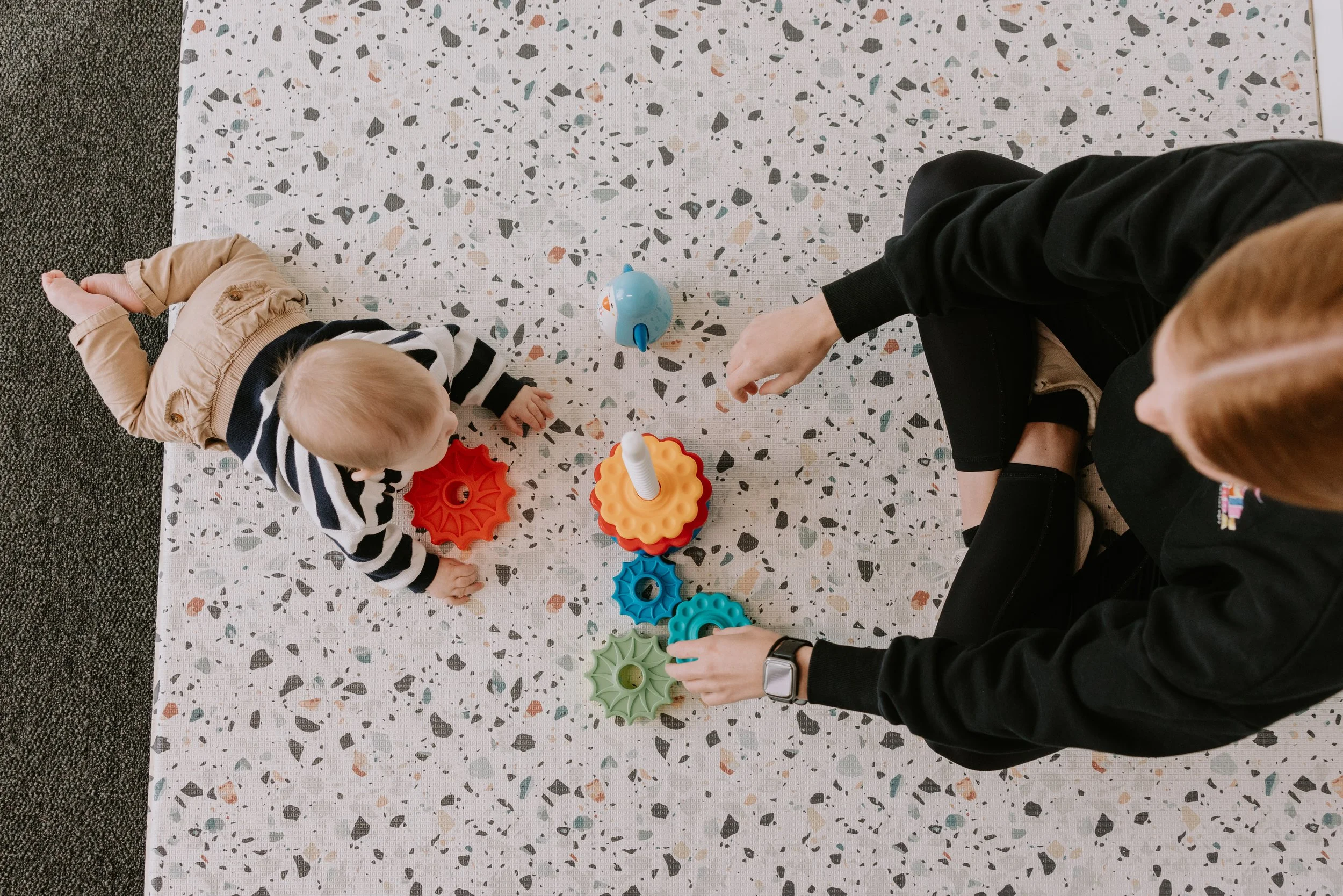
Crawling is often thought of as the stage between sitting and walking, but it is much more than just a way for babies to get from A to B. Crawling plays an important role in building strength, coordination and confidence, and it gives us valuable insight into how a baby is learning to use their body.
While some babies do skip crawling, understanding why it matters can help you make informed decisions about how to best support your baby’s movement and development.
Is it okay if my baby skips crawling?
This is a very common question.
Some babies skip crawling and move straight to pulling to stand or walking. While this can happen, crawling is an important milestone because it encourages babies to:
Take weight through their hands, arms and shoulders
Coordinate opposite arms and legs (right arm with left leg, and vice versa)
Shift weight from side to side and rotate through their body
Use their eyes and body together to move through space
These skills support later development, including posture, balance, coordination between both sides of the body, visual skills (important for reading), handwriting and playground activities.
If crawling is skipped because standing feels easier, often because babies can lock their joints to feel stable, it may mean that some underlying strength, control or coordination skills are still developing.
Skipping crawling doesn’t automatically mean something is wrong, but it can be a helpful sign to look a little more closely at how your baby is moving.
What skills does my baby need to crawl?
Crawling is a complex movement that relies on many systems working together. To crawl, babies need:
Head and body strength to lift and hold themselves against gravity
Shoulder, arm and hand strength to take weight through their upper body
Tummy and hip strength to stabilise the pelvis and move forward smoothly
Coordination, particularly using opposite arms and legs together
Smooth movement between positions, such as moving in and out of sitting, tummy time and hands and knees
Adequate tummy time and floor play, which form the foundation for all crawling skills. These activities give babies regular practice lifting against gravity, pushing through the arms, shift weight and rotating the body which are all essential building blocks for crawling.
When one or more of these building blocks is still developing, babies may avoid crawling or use alternative ways of moving.
What factors might be influencing my baby’s crawling?
Every baby develops differently, and there is rarely one single reason why crawling is delayed or looks different. More often, we see a combination of factors.
Neck tightness or head preference (torticollis)
Torticollis refers to tightness or imbalance in the neck muscles that causes a baby to prefer turning their head to one side.
This can influence whole-body movement:
Baby may favour one side, leading to uneven crawling patterns
Crossing the body from one side to the other may be more difficult
Tummy time may feel harder, reducing opportunities to build strength
Over time, this can limit rotation through the spine and shoulders, which is important for hands-and-knees crawling.
Reflux and comfort
Babies who experience reflux often spend more time on their back or in upright positions that feel more comfortable.
While this is completely understandable, it can reduce time spent on the tummy and the floor, where babies develop the pushing, reaching and weight-shifting skills needed for crawling.
Extensor tone and movement patterns
Some babies strongly use their back muscles to arch and extend their body. This is often a way of trying to feel stable.
Increased extensor tone may be linked to:
Discomfort such as reflux or constipation
Limited tummy time tolerance
Developing tummy and core strength, where arching is used as a strategy
Spending more time on the back or in supported upright positions
Babies with strong extensor patterns may lift their head and chest well but find it harder to shift weight forward through their arms, which can make hands-and-knees crawling more challenging.
Low muscle tone
Babies with low muscle tone may appear more “floppy” or tire easily when holding positions.
Low muscle tone can make it harder to:
Hold weight through the arms and shoulders
Keep the body stable on hands and knees
Sustain crawling for longer periods
These babies may prefer positions that require less effort, such as sitting or lying down, and may need extra time and practice to build strength and endurance.
Hypermobility
Some babies have very flexible joints that move easily.
While flexibility itself is not a problem, hypermobility can mean that joints lack stability. This can make hands-and-knees crawling feel wobbly or effortful, leading babies to avoid or delay crawling until they feel more secure.
Supporting crawling through play
Small changes to your baby’s play environment can encourage movement and exploration:
Place toys just out of reach to encourage leaning, turning and reaching
Provide time on surfaces with some grip, such as carpet or mats, rather than slippery floors
Allow some play time without socks or pants to help feet grip the floor
Make floor play fun and interactive; get down on the floor with your baby, talk, sing and play together
Use cushions or low obstacles to encourage problem-solving and movement in different directions
When should you see a paediatric physiotherapist?
Consider seeking support if you notice:
Poor tolerance to tummy time from around 4 months
Difficulty sitting independently or a strong preference for one position (i.e only likes sitting)
Difficulty moving in and out of sitting by around 8 months
Difficulty playing in kneeling at a toy by 8–9 months
W-sitting as a preferred position for much of the day
Crawling that is very uneven, effortful or avoided altogether
Early support can help build strength, confidence and enjoyment of movement.
When crawling looks different:
Not all crawling looks the same, and variation can be completely typical. Some babies briefly try army crawling, bottom shuffling or asymmetrical patterns as they explore movement.
It may be helpful to seek guidance if a pattern is persistent, such as:
Bottom shuffling with little use of the arms
Army crawling for an extended period
Consistently favouring one side when moving
These patterns can sometimes be linked to strength, flexibility, comfort or coordination differences. A movement-based assessment can help determine whether your baby is simply exploring or would benefit from extra support.
Why crawling supports development over time
Crawling helps babies practise skills that continue to be important as they grow. While crawling, babies learn to support weight through their hands, move their eyes smoothly while their body is in motion, and understand where their body is in space.
These early movement experiences support:
Strong arms and hands
Coordination between the eyes and body
Shoulder and trunk strength that later supports posture and fine motor skills
These foundations continue to influence how children move, play and learn well beyond the baby years.
What to do if my baby isn’t crawling?
At Canberra Children’s Physiotherapy, we:
Assess your baby’s movement patterns from head to toe
Look closely at neck, trunk and limb control
Support shoulder, arm and core strength
Consider comfort, feeding, reflux and position preferences
Provide practical, play-based strategies for everyday life
Our physiotherapy appointments are fun, play-based and tailored to each child. We work collaboratively with families and other health professionals to support meaningful progress.
If you’re wondering whether physiotherapy could support your baby’s development, please reach out to our team to talk through your concerns or book a developmental movement assessment. Early support can make a real difference.
FAQ’s
-
Some babies do skip crawling and move straight to standing or walking. While this doesn't automatically mean something is wrong, crawling builds important skills — including upper body strength, bilateral coordination, and visual tracking — that support later development. If your baby is skipping crawling because standing feels easier, it may be worth a movement assessment to check that the underlying skills are developing as expected.
-
Most babies begin crawling between 8–10 months. Signs that may warrant a physiotherapy assessment include poor tummy time tolerance from around 4 months, difficulty sitting independently, trouble moving in and out of sitting by 8 months, or crawling patterns that are consistently uneven, effortful, or avoided altogether.
-
Delayed or atypical crawling can be linked to a number of factors including neck tightness (torticollis), reflux, increased extensor tone, low muscle tone, or hypermobility. Often it's a combination of factors rather than one single cause. A paediatric physiotherapy assessment can identify what's contributing and guide the right support.
-
A physiotherapist will assess your baby's movement from head to toe, looking at neck and trunk control, arm and shoulder strength, and comfort factors like reflux or positioning preferences. Treatment is play-based and practical, with strategies you can use at home during everyday play to build the strength and coordination your baby needs to crawl confidently.