
When should my baby start rolling?
Summary: Rolling is an important milestone that builds the strength and coordination babies need for sitting, crawling, and walking. Most babies roll between 4–6 months, and delays beyond this can sometimes indicate an underlying issue such as neck tightness (torticollis), reflux, or muscle imbalance. If your baby isn't rolling by 6 months, rolling only to one side, or struggling with tummy time, it's worth seeking an assessment. Early support from a paediatric physiotherapist can make a real difference to your baby's movement development.
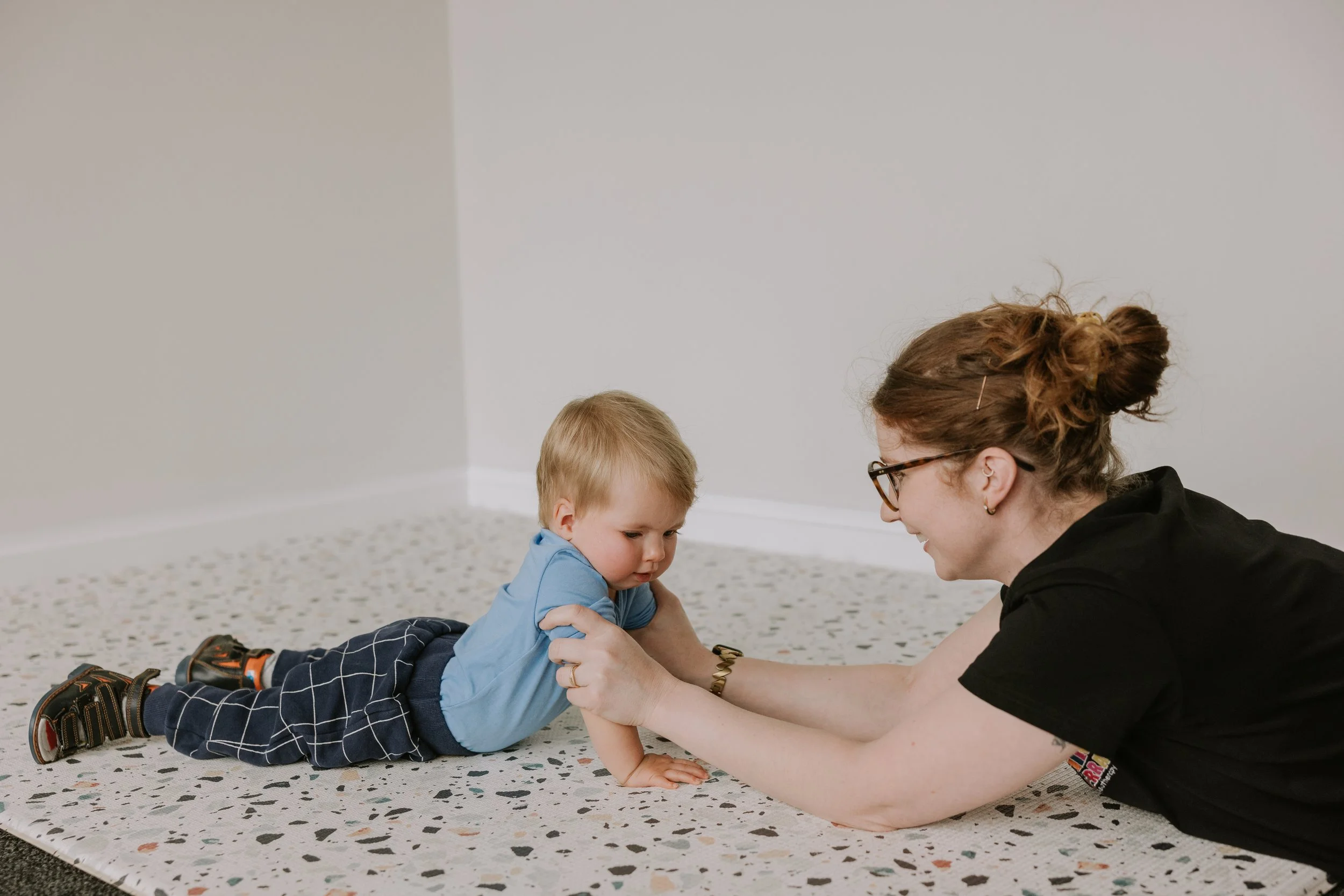
Rolling is an essential milestone in your baby’s development. It plays a crucial role in helping babies build strength, coordination, balance and body awareness. Achieving rolling is a reflection that a baby has developed adequate strength and coordination, which are essential for later developmental milestones such as sitting, crawling and walking later on. Rolling also helps babies explore their environment and learn how to interact with the world around them including how to move from one position to another.
But what happens when your baby isn’t rolling as early as expected? If your baby hasn’t rolled by 6 months, should you be concerned, or is it just a skill they will learn in their own time? Let’s explore the factors that influence delayed rolling and when you should seek professional guidance.
When Do Babies Typically Start Rolling?
Most babies start rolling between 4-6 months. Typically, babies first roll from tummy to back around 4-5 months and then learn to roll from back to tummy around 5-6 months. As with all infant development, there is a window of time for when this milestone can occur with some babies rolling earlier or later than others, however, delays beyond 6 months may suggest that something may be impacting your baby’s motor development.
While some babies roll earlier or start rolling later, some areas of concern include:
· Not rolling after 6 months
· Clear preference to only roll to one side
· Difficulty lifting or turning head in tummy time
· Difficulty controlling movement, i.e. overly stiff, effortful, uncontrolled
Some babies may take a little longer to develop the strength and coordination required to roll, but it’s important to understand the possible causes and when it might be time to seek professional support.
Possible Causes of Delayed Rolling
There are several reasons your baby may not be rolling by 6 months. Let’s take a look at some of the most common factors that can contribute to delayed rolling.
1. Torticollis (Neck Tightness or Preference):
Torticollis is a condition in which the muscles on one side of the neck become tight or imbalanced, often resulting in a head tilt and side preference. Torticollis can often cause delays in rolling due to restricted movement to one side. Babies with torticollis may:
Only roll in one direction
Struggle to lift and turn their head to initiate rolling
Experience difficulty shifting their weight from side to side
Struggle to rotate through their trunk
Have trouble reaching across their body past midline
These skills are essential for rolling. Over time, limited rolling exposure can contribute to developing asymmetrical movement patterns such as only rolling to one side or avoiding rolling altogether resulting in limited development of abdominal strength, motor planning and bilateral coordination. This can also lead to asymmetrical trunk tightness due to reduced movement. If left untreated, torticollis can lead to long-term developmental delays in rolling and other motor milestones.
2. Reflux and Gut Discomfort:
Gastroesophageal reflux (GERD) is common in infants and can cause discomfort during tummy time or when lying flat on their back. Reflux can look very different for all babies. Often it can be:
Frequently spitting up or vomiting
Difficulty feeding
Crying or hard to settle after a feed
Persistant Dry Cough
Gagging, or wheezing
Babies with reflux may avoid tummy time because it exacerbates their symptoms. Without sufficient tummy time, babies don’t get the opportunity to strengthen their neck, shoulder, and abdominal muscles, which are all essential aspects of rolling. It also limits their ability to improve weight shifting and reaching skills necessary for rolling.
Reflux can also lead to back arching, which reduces the ability to engage the abdominal muscles necessary for controlled rolling. This can delay rolling and other movement milestones.
3. Back Extensor Muscle Tightness:
Some babies develop excessive tightness in their back (extensor) muscles, which can arise from issues like reflux or discomfort during tummy time. When babies rely on their back muscles to cope with discomfort or to initiate movement, they do not develop the abdominal strength and control needed for effective rolling.
Excessive reliance on back extensor tightness can also make it harder for babies to rotate their body, shift weight, maintain a strong chin tick and cross the midline, all key movements for successful rolling.
When extensor muscles become dominant, it can also lead to:
Reduced abdominal activation and strength
Increased tightness through neck and upper back muscles
Increased stiffness through the spine
Shoulder joint tightness
How Delayed Rolling Affects Other Milestones
Rolling plays a crucial role in preparing babies for other gross motor skills, including sitting, crawling, and walking. If a baby isn’t rolling by 6 months, they may face delays in other areas of motor development.
For example:
Sitting: Rolling helps babies develop the abdominal strength and trunk control needed to sit upright. If they aren’t rolling, they may struggle with sitting unsupported later on.
Crawling: Babies who miss the rolling milestone might also face delays in crawling or crawl with altered patterns due to asymmetrical muscle development
Transitionary Movements: Rolling teaches babies how to shift weight and move from one position to another. Delayed rolling can impact their ability to transition smoothly from tummy to sitting or from sitting to crawling.
What skills does my baby need to roll?
Head control and good neck movement to lift and turn head throughout roll
Neck strength to maintain strong chin tuck
Arm strength to take weight through forearms
Abdominal strength to bring feet towards chest to initiate roll
Ability to weight shift side-to-side to generate momentum to initiate and complete roll
Ability to cross midline to be able to reach across body
Supporting Rolling Through Play
Incorporating meaningful play into babies wake windows is a great way to promote rolling and build up the necessary skills to successfully roll. These include:
Encouraging fun tummy time that promotes lifting and turning the head
Placing toys slightly to the side of your child to encourage weight shifting
Engaging in side-lying play
Encouraging reaching and crossing the midline with toys
When to Seek Help from a Paediatric Physiotherapist
Current evidence supports that early intervention is key in achieving better health outcomes for your child. If your baby hasn’t started rolling by 6 months or seems to struggle with the movement, a paediatric physiotherapist can help. Physiotherapy provides targeted interventions to address any underlying physical issues, such as muscle tightness, coordination difficulties, or discomfort. In our sessions, we will complete a comprehensive physical assessment and observe movement patterns to identify which aspects of rolling are currently limiting your child from confidently completing this milestone. Common interventions include:
Neck and trunk mobility exercises: To help improve neck rotation and trunk mobility, addressing any tightness or restrictions in movement.
Strengthening exercises: To build the abdominal, shoulder, and neck muscles necessary for rolling.
Symmetrical movement patterns: To ensure that your baby is engaging both sides of their body equally, promoting balanced development.
Comfortable play strategies: To ensure that your baby is getting the opportunity to develop strength and coordination during play time.
If your baby is not rolling by 6 months, or if you notice signs of discomfort or asymmetry, it’s a good idea to consult with a paediatric physiotherapist. Early intervention can help ensure that your baby develops the strength, coordination, and motor planning needed for future milestones.
At Canberra Children’s Physiotherapy, we love supporting children to achieve their developmental milestones and improve their gross motor skills. We work collaboratively with families and other health professionals to support meaningful progress.
FAQ’s
-
Most babies roll from tummy to back around 4–5 months, and from back to tummy around 5–6 months. If your baby hasn't rolled by 6 months, or shows a clear preference for one side, it's a good idea to seek an assessment.
-
Common causes include neck tightness (torticollis), reflux causing discomfort during tummy time, and tightness in the back muscles that limits rotation and weight shifting. A physiotherapy assessment can identify what's contributing to the delay.
-
It can. Rolling builds the strength and body awareness babies need for sitting, crawling, and transitioning between positions. Addressing a rolling delay early helps set a stronger foundation for the milestones that follow.
-
A paediatric physiotherapist will assess your baby's movement patterns and identify what's limiting their rolling. Treatment may include mobility and strengthening exercises, strategies for tummy time, and play-based activities to encourage symmetrical movement at home.