
When to be concerned about Flat Feet in Children
Summary: Flat feet are very common in children and are often a normal part of development — most young children have them, and arches typically form naturally by age 6–8. In many cases, no treatment is needed. However, flat feet can sometimes be confused with related conditions like hypermobile or pronated feet, which do benefit from treatment. If your child has pain, difficulty walking, or flat feet that are rigid, asymmetrical, or not improving with age, an assessment with a paediatric physiotherapist or podiatrist can help determine whether any support is needed.
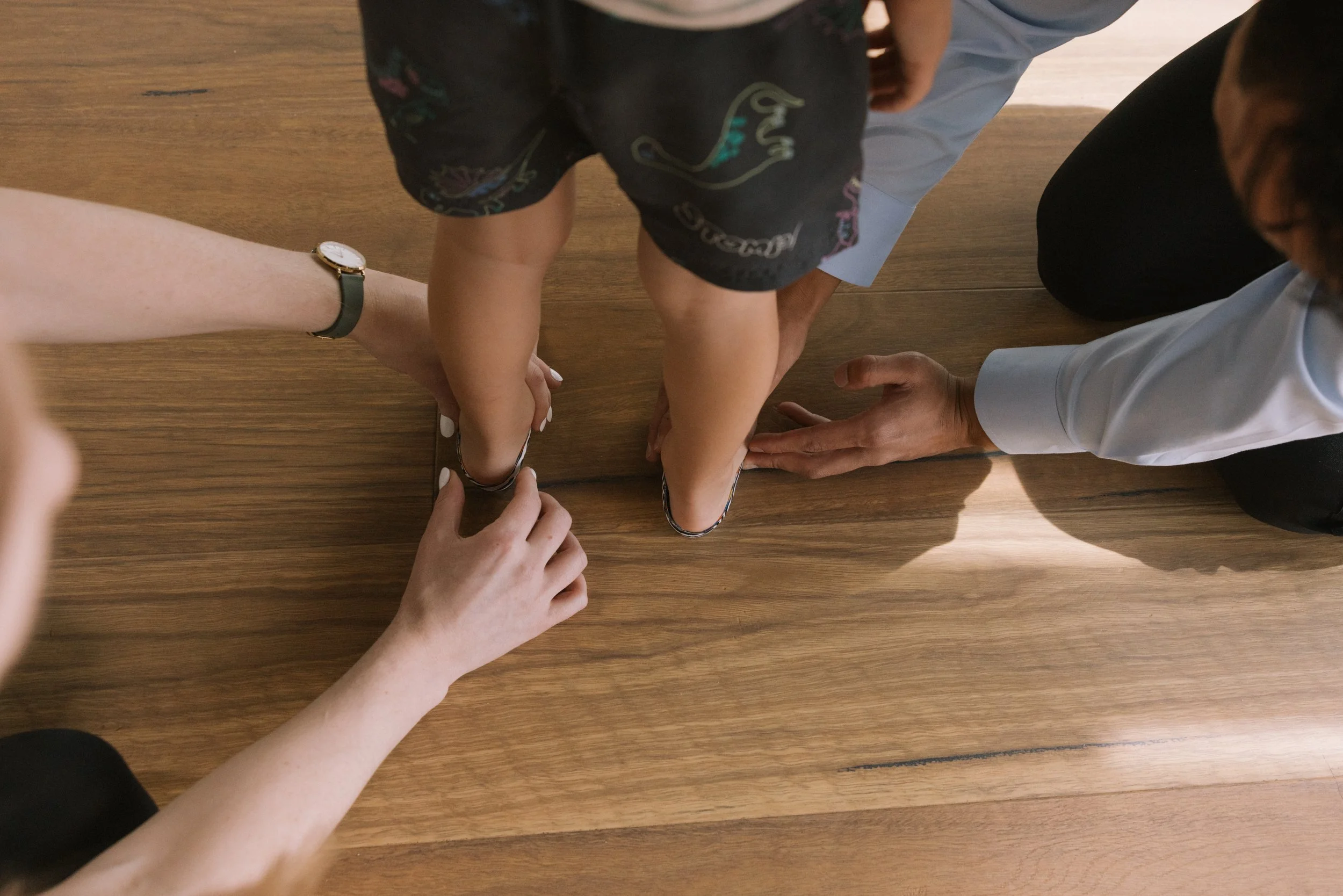
Flat feet (also called “pes planus”) are a common concern in children and can leave many parents wondering if it’s normal or if their child needs treatment. Simply put, flat feet occur when the arches of the feet are low, absent or hidden, making the entire sole of the foot touch the ground when standing. The estimated prevalence of flat feet remains is stated to be between 2-70% of the population, which is reflective of how broad the definition for flat feet is.
The biggest issue we see at our clinic, is to the untrained eye, flat feet are often confused with other conditions such as hypermobile or pronated feet which can impact how a child moves and which responds well to treatment.
A flexible flat foot should be symmetrical, pain free, and not impact movement.
What causes Flat Feet?
Many children are born with flexible flat feet, and this is a normal part of development. Around 97% of 18 month old children have flat feet, 54% of 3 year olds, 26% of 6 year olds and 4% of 10 year olds.
In children, there is a fat pad that sits in the arch of the foot which can give the appearance of a flat foot. As children grow, the fat pad is absorbed and the arch appears (Hooray!). In most children, the arches usually form by age 6–8.
When to Be Concerned
Although flat feet are often harmless, certain signs may indicate a need for assessment by a paediatric physiotherapist or podiatrist (or both!). These signs include:
Pain in the feet, ankles, or legs that is persistant or that comes and goes
Difficulty or coordination challenges when walking or running
Feet that turn inward or outward significantly
Feet that roll in when a child takes a step
Uneven shoe wear or frequent tripping
Flat feet that do not improve with age or that only affects one side of the body.
What does an assessment involve?
To determine whether a child requires treatment, we need to fully assess their movement and determine whether their flat feet is a concern or not. This may involve looking at:
Foot Structure - we will have a look at how the bones and joints in the foot move to see if there is any hypermobility or stiffness.
Muscle strength - Muscle strength in the foot is a good indicator of how the foot is functioning. If we find any weakness, we might provide you with some exercises.
Gait (walking and running pattern): We will assess how a child walks to see if there is any altered movement patterns or compensatory strategies.
Shoe Review: We often look at a child’s shoes to see if there is symmetrical wearing. This gives us a good idea on whether they have a typical walking pattern day to day
Hips and Knees: We will usually assess a childs hip rotation and knee extension. Sometimes children with a flat foot appearance can have hip issues that cause their legs to rotate outwards and some children may hyperextend their knee due to stability challenges or muscle tightness. It’s important we fully assess each child to ensure we can provide appropriate advice and treatment.
Strengthening exercises – improving foot, ankle, and lower leg muscles
Balance and coordination activities – encouraging proper gait and posture
Footwear guidance – supportive shoes that fit well
Orthotics – occasionally recommended for pain or severe cases
Early assessment is important if your child experiences pain, difficulty with activity, or if you notice your child’s flat feet are rigid, asymmetrical or appear concerning in any way.
Key Takeaway
Flat feet in children can be normal and common in developing children. They are far more common in younger children and become less common as children get older. Flat feet that are flexible and pain-free often don’t require treatment, but it’s important to determine that ‘flexible flat feet’ is an accurate diagnosis. If your child experiences pain or difficulty walking, a timely assessment by a paediatric physiotherapist and/or podiatrist can help guide treatment strategies to prevent pain and help kids move more comfortably.
FAQ’s
-
Yes, very common — around 97% of 18-month-olds have flat feet. Arches develop gradually, and most children's feet look quite flat in the early years due to a natural fat pad in the arch. By age 6–8, arches have usually formed in most children.
-
If your child has persistent pain in their feet, ankles, or legs, frequently trips, has uneven shoe wear, or their flat feet are only on one side or not improving as they get older, it's worth getting an assessment. Pain and asymmetry are the two biggest signs that something may need attention.
-
No. Flexible, pain-free flat feet that aren't affecting movement typically don't require treatment. The important thing is making sure that's actually what your child has — flat feet can look similar to other conditions that do respond well to treatment.
-
Flat feet, pronated feet, and hypermobile feet can all look similar but have different causes and implications. This is one of the most common things we see misidentified in clinic, which is why a thorough assessment matters before deciding whether treatment is needed.
-
We look at foot structure, muscle strength, walking and running pattern, shoe wear, and hip and knee movement. Sometimes what appears to be a foot issue is actually related to hip rotation or knee stability, so we assess the whole picture rather than just the foot.
-
Depending on what we find, treatment may include strengthening exercises for the foot and lower leg, balance and coordination activities, footwear guidance, or orthotics in more significant cases. Many children need little more than some exercises and reassurance.